Tuesday, March 20, 2018

Playing Catch Up - What's been happening

I'm finally sitting down to write real blog post. I have so much to share! I had not really realized how busy things have been until this week when I actually found myself with some much needed down time.

Most of January was spent finishing up some long neglected projects in the UFO pile, and I'm pleased to report I've made it through about half of the pile. The items that are left will need to be reevaluated so I can reside what's really worth finishing and what can be reused for other projects or just tossed. I'm at the point where I really want to clean and organize the sewing room and the UFO pile is a great place to start.

Here's a look at what I've finished!

Reproduction 1940s pinafores - Available here on Etsy

At the end of February I attended the Northeast Reenactors Fair and set up a booth for Emily's Vintage Visions along side Joani from A Timeless Collection. I had heard good things about the fair in the past but never had the change to go. This was a new experience for me as I've only done a handful of displays and vendor shows. Overall it was a successful weekend but I think I'll plan my set up a little differently next time. The Reenactors Fair was a great opportunity to meet and visit with people. One of the highlights was actually getting to do a live FB video at the end of Saturday with Joani, even if the video was sideways! Ooops!


Photo credit - A Timeless Collection

The first weekend of March was the GBVS's White Lightning Ball. Another fun event and one I look forward to each year. I was super excited (but also really nervous!) to debut the 1920s style head pieces I have been working on. They are made from vintage, and in some cases antique, trims and feathers in my stash. The two silver head pieces with the feather sold right away! I couldn't believe it!


Thanks to A Timeless Collection for this photo of hubby and I at the @Greater Boston Vintage Society's White Lightning Ball this past Saturday. He is wearing a 40s vintage sweater and pants fromOverAttired Vintage Fashion. My late 1920s/early 1930s dress is from @We, McGee Vintage

Over the last couple of weeks I picked up a sewing project I first started well over a year ago, a new 1770s gown!!! I can't begin to tell you how good it feels to dive head first back into historical sewing!! It's really my zen sewing, and yes, I'm doing all by hand. I'm using the Fashionable Gown pattern from Sign of the Golden Scissors. I've posted a few pictures on my Instagram account as well as on Facebook. There will be a proper blog post, or two, on the gown. So far I'v been good about taking construction pictures.


Thursday, February 1, 2018

WAVES - Women Accepted for Volunteer Emergency Service (Blog Series)

Hello all, 
Wow, is it really February already? I'm OK with that because it means spring is just around the corner, and I'm ready for some warmer weather. One of the things I mentioned in my last post, one of the things all be working on in 2018 is sharing more information about the WAVES during WWII.
This is the first of several planned posts. To start, I thought I would give a brief overview of the WAVES and some basic facts. Later on I will have some more in-depth posts that discuss uniforms, various jobs, personal experiences of WAVES as well as what it is like to be a WAVES reenactor. I will be teaming up with my friend Sara from the Canteen Cowboy on some of these. I hope you will follow along!  

Recruiting poster for the U.S. Navy WAVES (Women Accepted for Volunteer Emergency Service) during world War II. Illustration by John Falter, 1943.
Pinterest
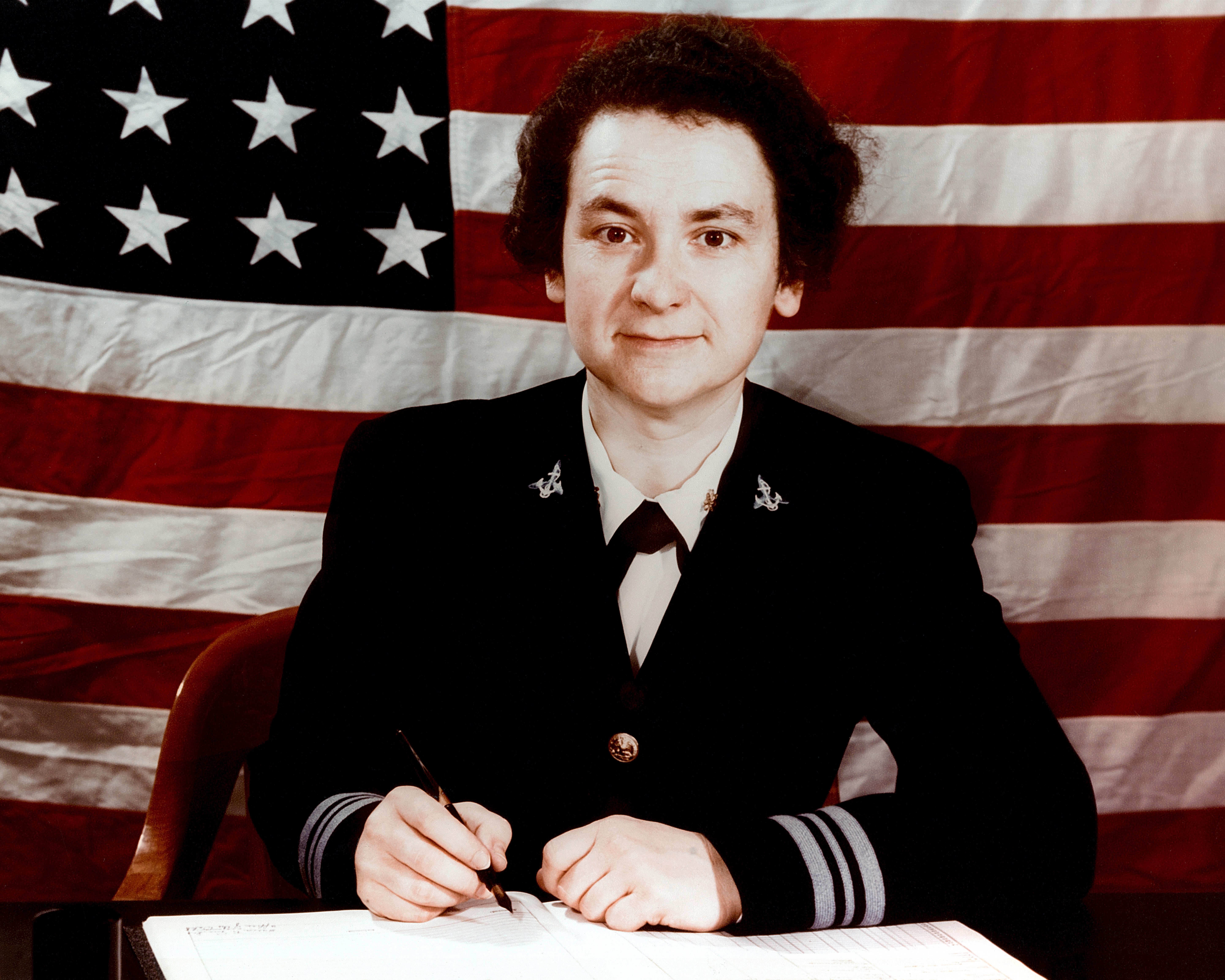
LCDR McAfee while director of the WAVES - Source
The WAVES (Women Accepted for Volunteer Emergency Service) program was created in July 30, 1942 as the need for additional military personnel grew during World War II. The WAVES were an all-woman division of the U.S. Navy with its members holding the same rank and ratings as male personnel. WAVES also received equal pay and were subject to the same military discipline as male personnel. 

The Women's Reserve of the Coast Guard (SPARS) was created on Nov. 23, 1942 "to expedite the war effort by providing for releasing officers and men for duty at sea and their replacement by women in the shore establishment of the Coast Guard". The first 153 enlisted SPARs and 15 SPAR officers were former WAVES who agreed to be discharged from the Navy and join the Coast Guard.

WAVES and SPARS duties were restricted to the continental U.S. until late in 1944, when overseas service was finally authorized for the WAVES. Even then the WAVES were restricted to the U.S. territories of Alaska and Hawaii. While many WAVES filled traditionally female secretarial and clerical jobs, thousands more served pushed the gender barrier and took on duties in the aviation community, Judge Advocate General Corps, medical professions, communications, intelligence, science and technology.  Aviation Machinist's Mates, Aviation Metalsmiths, Control Tower Operators, Aerographer's Mates, Link Trainer Instructors, and Parachute Riggers are just a few of the duties performed by WAVES during the war.

At the end of World War II, there were over 8,000 female officers and as many as 80,000 enlisted WAVES, equaling roughly 2-1/2 percent of the Navy's total strength.

Fast Facts
  •  In August 1942, Mildred McAfee, was sworn in as a Naval Reserve Lt. Commander, becoming the first woman commissioned as an officer of the U.S. Navy. 
  • Within the first year, over 27,000 women joined the WAVES. 
  • The notable New York fashion house, Mainbocher, designed the WAVES uniforms. The design services were secured through the efforts of Mrs. James V. Forrestal, wife of the Assistant Secretary of the Navy. 
  • By mid-1944, the WAVES began accepting African-American women. Harriet Ida Pickens and Frances Wills became the Navy's first, and only, African-American WAVES officers in December 1944. Approximately one in every 36 women who enlisted and trained for the WAVES was an African-American. 
  • As many as a third of all WAVES were assigned to naval aviation. These women fixed aircraft, packed parachutes, provided weather information, served as link trainer instructors, gunnery instructors, coordinated air traffic from control towers and a performed host of other aviation-related jobs. 
  • By 1945, enlisted women could choose from a total of 38 different ratings in the Navy. Almost every shore establishment had WAVES on active duty fulfilling necessary military work of every kind, from general office workers and supply accounts specialists to film projectionists and drivers to dental prosthetic technicians. At the Navy Department headquarters in Washington, D.C., over half of all service personnel were WAVES. Approximately 70 percent of the Bureau of Naval Personnel was composed of WAVES. Large numbers of WAVES were assigned to the Hospital Corps where they participated in Navy recovery, therapy and rehabilitation programs. 
  • By the end of World War II, the WAVES consisted of 8,000 female officers and close to 80,000 enlisted women.
  •  By September of 1946, the majority of WAVES were either discharged or released to inactive duty. 
  • Despite their involvement in World War II and post-war, the organization was disbanded in 1948 when the Women’s Armed Services Integration Act was passed.  This new law permitted women permanent status within the armed forces.  Despite this change, the acronym WAVES continued to be used for almost 30 more years.    

Thursday, January 25, 2018

2017 Sewing Year in Review

Each year I seem to start out with a grand list of projects, more than I know I'll actually complete. Though I guess there's nothing wrong with feeling ambitious. It's fun to plan new projects but feels even better to get them completed. However, 2017 was not my year for getting things done. I need to learn to be more realistic in my goals and except that it's perfectly OK to take time for myself.

The winter months can be hard for many of us, and I admit I was struggling at this same time last year to find the motivation to work on things. I was just starting to find my sewing groove when in March, I learned that my best friend from childhood last his battle with cancer. Then in August my brother passed away unexpectedly. It's still a struggle but I'm finding ways to move forward. Anyone who has experienced the loss of a loved one will undoubtedly know how important that is to do. For me it means making more time for visits with family and friends, spending time working with the horses and yes, evening working on some sewing. (Thank you again to everyone who reached out with your thoughts, prayers and words of encouragement!)

So, given the crap year I had in 2017, I'm rather surprised by what I was able to accomplish. And to be fair, not all of 2017 was bad. There were many good things that happened.

Completed Sewing Projects for 2017
1940s blue linen pants and matching bolero for my friend Beth
Red linen 1930s pants
1940s white cotton blouse
1930s denim pj pants for day wear
1940s Gold corduroy jerkin
Early 1940s wool plaid skirt
1920s ivory velvet dress


Projects Started in 2017 But Not Completed (Yet!)
1940s green linen pants and matching bolero
1940s wool plaid dress
1940s pinafore with rickrack trim
Mock up for 1770s "fashionable gown" 
1920s green silk dress


So, what else did I do in 2017 you ask? I went to a bunch of events....

Events
GBVS's White Lightning Ball
Reading Air Show
Forth of July American Timeline at Strawberry Banke Museum
WAVES Display at the Living History Association Timeline
GBVS's 1920s Lawn Party at the Crane Estate
260th Anniversary of Siege of Ft William Henry
Collings Foundation Battle annual Battle for the Airfield  
GBVS's Winter Formal


Other Projects and Cool Stuff from 2017
I actually posted a few videos for my YouTube channel! Go me!! And at the end of 2017 I had almost 1000 followers on Instagram which is pretty cool. I'm just over that number now. :)

At the Reading Air Show I got to meet Emileigh Rogers of the blog Flashback Summer in person. She camped with my group for the whole weekend and we had a blast!

I set up my very first WAVES display this summer at a small timeline event. Visitors seemed to really enjoy it so now I'm supper motivated to continue my research and document my growing collection of WAVES-related items.

With all the stress and heartache that 2017 brought, one of the things that has really helped is working with my sister and her horses. Pony therapy is the best!!! Animals really do understand. A few days after my brother passed, my sister, sister in law and I all went riding. It was exactly what we needed. Just to prove to ourselves that it was possible, even in the worst of times, to get back in the saddle. Physically as well as metaphorically speaking.

I made some really good progress this summer and I'm hoping to continue riding when the weather gets better. I rode a couple days each week and when the time a weather allowed sometimes I rode all three horses.


Looking Ahead to 2018
Other than the normal, eat better, be more organized and work from the fabric stash kind of plans for 2018, I hope to do a few more videos for my YouTube channel as well as some more live videos on Facebook and/or Instagram. I think this is a really fun feature and I know several bloggers and small businesses have had great success with it. If you have an idea for a video, let me know! I have plans for revamping my Etsy shop so right now listings are kind of slim. As I finish the reproduction items that have been languishing in the UFO pile, and get good photos of them, I will be listing a bunch of new stuff! If you are in the New England area look for me at the Northeast Reenactors Fair next month!!

Other exciting things in the works for 2018 include working with my friend Sara on a series of blog posts about the WAVES during WWII. We are both collectors of all things WAVES and we want to be able to share our research with others. I'm hoping to have the first post up sometime early next month.

I look forward to working more with A Timeless Collection this year too. If you are not already following them on Facebook or Instagram, you need to! We have a special group photo shoot planned for this weekend and I can't wait to share more about it.

So yeah, I guess that pretty much wraps up my last year. What are you plans and goals this year?

Sunday, December 17, 2017

December Vintage Style

Just a quick post today! I'm joining Flashback Summer's Vintage December Style challenge. Lots of us have been sharing our outfits on Instagram this month. If you want to join in or just follow along, be sure to check out the tag #decembervintagestyle.

#vintagedecemberstyle with Flashback Summer
I haven't done much sewing this year, so all but one of these outfits are from last year. Still, I'm hoping to go through the closet and see what I can come up with for some new festive attire.

First up is the 1920s silk velvet dress that I wore earlier this month for the GBVS Winter Formal. Ivory and gold makes a nice combination for the Christmas season. You can read more about this outfit in my last blog post.


This 1940s evening dress is one I made back in 2013 for the very first GBVS Winter Formal. It's made from a most obnoxious shade of mustard crepe using Simplicity 1469. The dress is trimmed with modern sequins and jet beaded trim from the Victorian era.

Read more about making this dress


Here is what I wore last year when I was trimming our Christmas tree. I love the versatility of pinafores! This particular pinafore also works great for a Memorial Day or Fourth of July outfit!


And last but not least, a little 1950s for you! I don't often wear 50s but once in awhile I come across a piece that I really love. This coat is one of those pieces. The princess cut is flattering and super fun to wear over fuller skirts and dresses. More photos of this outfit in this post.


Wednesday, December 13, 2017

1920s White Velvet and Gold Lace

Finally, a finished sewing project to share with you! I haven't done much sewing the fall, it's been hard to find the motivation but I am slowing getting back into things. The GBVS's Winter Formal at the Lyman Estate earlier in December was just the thing I needed and a great excuse to make a new 1920s dress.

I think I've mentioned before my love/hate relationship with the 1920s. Some of the styles are so gorgeous, particularly the evening dresses. I mean, what's not to love about those colors, bead work and beautiful fabrics? But, the fit of 1920s dresses can be so boxy looking and down right frumpy that I tend to lean more to other decades. Then I found THIS!

"Vionnet model in white velvet gown entirely untrimmed except for fine gold stitching at hips. At the back if falls in wing-like drapery. Drawing by Benito." The Art of Vogue. Covers 1909 - 1940 by William Packer
And THIS!! Both sketches are by Eduardo Garcia Benito, a fashion illustrator and painter who was well-known for his beautiful cover designs for Vogue Magazine during the 1920s and 1930s.

Fashion Illustrated A Review of Women's Dress 1920 1950 by Deborah Torrens
Ahhhh, a version of those sketches has been on my 1920s sewing wish list for such a long time. And I happened to have just the right fabric waiting in the stash. So yeah, sometimes things are meant to be.

However, I knew from the beginning that the back of the dress was going to be the most difficult part to create. I was having a hard time visualizing what shape the pieces for the back drape needed to be. Add this to the fact that my velvet fabric was left over from another project. I had just enough to cut the panels for the skirt and bodice front. The back pieces were constructed using some odd shapes of fabric. Not ideal, but the finished dress has the look and feel of the original Benito sketches so I'm pretty happy with it.

Image may contain: one or more people and people standing

I don't really have construction photos but here is the run down. The lining for the top was made using McCall 5632 (see the full version of that dress here) with the neckline altered slightly and the sleeves left off. The skirt is three panels of velvet (two for the back, cause left over fabric) and has 9 rows of gathering stitches, known as shirring, to pull the fabric in at the hips. The skirt lining was two smaller panels of silk slightly larger than my hip measurement.


The gold lace, which I believe is from the 1920s or early 1930s, is tacked to the silk lining. Creating the back drapes, though super fiddly, were actually quite fun to create. I got to apply some historical draping and fitting techniques that I don't normally get to do unless I'm making an 18th century gown. The bodice front was constructed first with the velvet mounted on top of the silk lining. I then pinned the shoulders and side seams to the bodice back lining.


With the bodice on my dress form, I basted the velvet fabric for the back drapes at the side seams of the lining and around the arms. Next I played around with the velvet trying different ways of pleating at the shoulders and waist, pinning and re-pinning, until I was happy with the look. As much as I loved the low open back of the Benito sketch, I knew that I would be more comfortable with a slight higher back. Plus I really wanted to work my vintage lace into this project. It was such a small piece but I really enjoy being able to incorporate vintage and antique notions into my sewing projects. (You may remember my 1940s evening dress trimmed with Victorian jet beading.)


And of course, not project is complete without kitty "help."


Cori wore his vintage tux. The jacket is actually dated December 1909! Doesn't he look dapper? His shirt, collar and matching peaked waistcoat and bow tie are all vintage as well.


About the Outfit
Dress: Made by me
Accessories: Pearls belonged to my grandmother, Art Deco pin and comb antique store finds
Stockings: WKD

Summary of the Project
Fabrics: Off white silk velvet from Delectable Mountain cloth, vintage silk for the lining and vintage gold lace
Pattern: The top portion of the dress is roughly based on McCall 5632 with the back draped. The skirt was just a large rectangle that was shirred at the sides to hip my hip measurement.
Year: 1920s
Notions: Thread and vintage gold lace.
How historically accurate it it? Pretty accurate. Material sare accurate for the time, pretty sure the lace is 1920s or early 1930s.
Any tricky parts to the pattern? Well.... Draping the back would have been waaaaay easier if I had more fabric to work with as mentioned above. Also, silk velvet is fussy to work with.
Did you change anything? I modified the neckline of the original pattern slightly for the bodice.
Time to complete? I don't know how many hours but I worked on this off and on for about a week and a half.
First worn: December 3rd, 2017 at the Greater Boston Vintage Society Winter Formal.
Total cost: The silk lining and lace trim are from the stash. The velvet was left over from another project. I think it was around $20 or $30 a yard and was 54" wide but it's been sitting in the stash for a could years and I can't really remember. I would guess around $60 to $75.
Notes: The fit is a bit wonky which isn't helped but the weight of the velvet. I think if I were to make this again I would take the shoulders up a bit more and maybe add a sash or side drape.
Related Posts Plugin for WordPress, Blogger...